The Myth of the Perfect Practice Space
A creative practice space need not be a dedicated room. Learn how to choose a repeatable place, make a clear start and adapt it to the work.
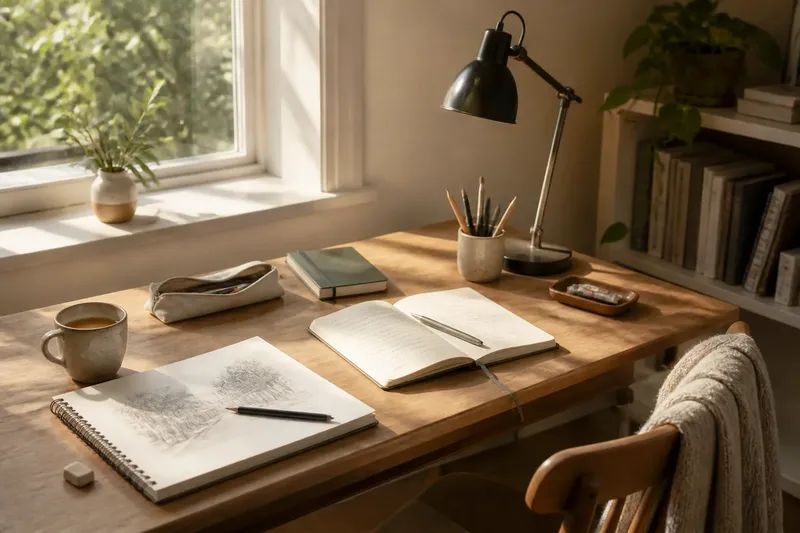
The most common mistake with a creative practice space is waiting for a room that stays tidy, quiet and entirely yours. That delay can cost you the small, regular starts through which a habit takes shape. A dependable place to begin is often more useful than a perfect studio.
Do you need a dedicated room to practise?
No. Many creative habits can begin in a corner of a kitchen table, beside a window or at a desk that serves other purposes. What matters is whether the spot lets you start without a major rearrangement.
A dedicated room can be welcome, especially when a practice needs to remain set up or makes a mess. But it is not an entry requirement. A writer may need a notebook and a surface; someone learning to sketch might work with a pad and pencil on a train or during a quiet break. The right setting depends on the activity, not on whether the door has a studio sign.
Think of a practice spot as a bookmark rather than a whole library. It marks where you can return; it does not have to contain every tool or resource the practice might ever use.
What makes a place easy to return to?
A useful place has a clear starting cue. That could be a particular chair, a desk lamp, a folder beside your laptop or a familiar view from the window. When the cue is easy to recognise, it helps you remember what you meant to do.
Choose an arrangement that suits the work itself. A sketchbook and pencil need a stable surface; knitting may be comfortable in an armchair with good light; editing a photograph is easier where you can see the screen clearly. The aim is not to display a complete identity as an artist. It is to make the next session approachable.
Consider the kind of attention your practice asks for. Reading music or editing a photograph may call for steady light. Writing lyrics could suit a quieter corner. If noise, interruptions or limited surfaces are part of the household, consider when and where you can work around them rather than treating them as evidence that practice is impossible.
How can you adapt a space to the task?
Instead of trying to make one location work for every activity, match the task to the conditions it needs. A desk beside a window might suit drawing, while a library table may be better for reading or planning. For work that needs quiet, choose a time when the household is less active or look for an appropriate place outside the home.
Be specific about what the task requires. Does it need a firm surface, natural light, access to a computer, room to move, or permission to make noise? Those answers help distinguish a genuine practical constraint from a wish for more attractive surroundings.
Say you want to practise watercolour, but the only available table is used for meals. Imagine that you first check whether a nearby library has a suitable art room; it does not, so you ask a local community centre about its open studio sessions. If the centre permits watercolour work and has a suitable table, you can plan practice there; if not, the sensible result is to choose a different activity for home and reserve painting for a fitting venue.
What if your practice needs more room or specialised tools?
Separate what must be available from what would merely be convenient. A sculptor may need a protected surface and room for materials to dry; a dancer needs enough clear floor for safe movement; a ceramic practice may depend on access to appropriate equipment and facilities. In these cases, a kitchen corner may not be suitable for the work itself.
A small starting place can still support the practice around that work. It might hold a sketchbook for planning, a folder of reference images or a list of questions to take to a shared workshop. A community studio, class or other suitable facility can provide access to equipment that cannot sensibly be improvised.
Take requirements such as ventilation, a stable surface or a particular instrument seriously. If what you are missing is matching storage or a blank wall, ask whether that feature affects the next action or simply makes the setting feel more finished.
How can you keep a practice space usable?
Give the materials a defined home, such as a drawer, shelf or cupboard. Keep the items you use regularly there, and store less-used supplies separately. When the space becomes crowded, remove anything unrelated to the current work or put it somewhere else.
Make the first action obvious. Leave a notebook open to the current page, mark the place in a score or write the next task on a note. That way, you can see where to begin rather than spending the session deciding what the project was about.
Build a brief closing action into the session. Cap the pens, return a book to its shelf or cover work that should not be disturbed. This is not a demand for perfect tidiness. It leaves a useful clue for your next visit and keeps the location fit for its other purposes.
What should you do when your usual place is unavailable?
Choose a backup before you need one. If your desk is occupied, perhaps a notebook works at a library table; if a shared room is busy, perhaps you can do a quieter part of the practice elsewhere. The backup should suit the actual task, not imitate the main space.
Some practices divide naturally into smaller tasks. A musician might review a score away from the instrument; a photographer could plan a route without editing images. For other work, the central activity cannot travel. In that case, waiting for a suitable place is sensible, and a modest preparation task can keep the thread of the practice alive.
Do not turn every location into a demand to work. A backup is an option, not a test of commitment. If a place is uncomfortable, distracting or unsuitable for the materials, choose a different time or return to the usual spot later.
How can you tell whether a space is helping?
Ask whether it makes the first useful action easier. Can you see what you need? Is there enough light or room for the task? Can you work there without disrupting someone else? These practical questions reveal more than whether the space looks like an artist’s studio.
Try a small adjustment and observe what changes. Move a lamp, choose a different time of day or use another suitable location. If starting becomes less awkward, keep the change; if it creates new hassle, undo it. There is no need to redesign the whole home around a practice before you know which part of the arrangement matters.
Can a small creative practice space really be enough?
Where should you start if you have no spare surface?
Look for a suitable place beyond home, such as a library, class or community studio, depending on the task. For work that needs specialised equipment or an uninterrupted setting, identify a facility that can meet those needs.
Should practice materials stay out between sessions?
Only if leaving them out is practical for you and anyone who shares the space. Otherwise, give them a regular place and leave yourself a visible note or bookmark to make the next start clear.
What if the household is noisy or busy?
Try a different time, a quieter location or a part of the practice that can tolerate interruption. If none is workable in the moment, postponing the session is a reasonable choice; it does not mean the habit has failed.
When is a dedicated room worth pursuing?
Consider one when the work regularly needs to remain set up, calls for equipment that cannot be moved easily or creates practical disruption in shared areas. The decision should follow the needs of the practice and the people using the home, not an assumption that a serious creative life requires a studio.
The myth of the perfect practice space can make ordinary constraints feel like a verdict on your ability to begin. A repeatable place, a clear starting cue and conditions suited to the work may be enough for many creative habits. Let the demands of the practice—not an imagined studio—tell you what the space needs next.