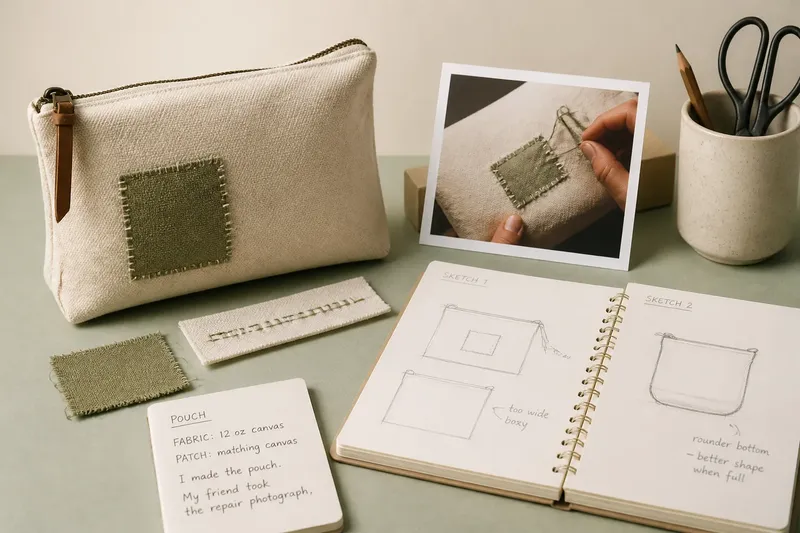
A First Creative Swap: Plan What You Can Bring and Take Away
Plan a creative swap with clear contributions, fair boundaries and a simple way to keep useful materials and skills in circulation.
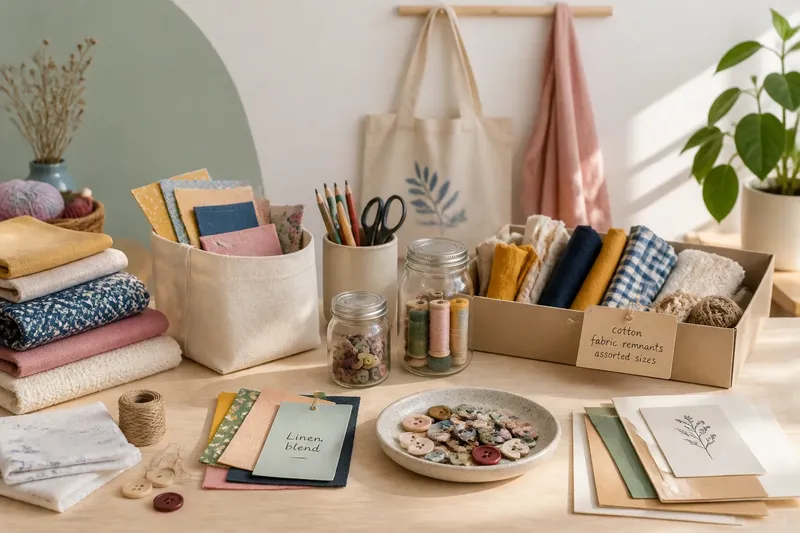
The common mistake at a first creative swap is inviting people to bring “anything they don’t need” and sorting out the rest on the day. That can leave the host with unwanted scraps, participants unsure what they may take, and useful materials stranded in a heap. A little planning turns the gathering into a fair exchange: people know what they can offer, what they can take, and what happens to anything left behind.
A creative swap can trade materials, time or know-how. It need not balance every contribution item for item. The aim is to make sharing comfortable and practical, not to put a price on generosity. Choose an approach that fits your group, then state its boundaries before anyone packs a bag.
Which kind of creative swap suits your group?
There are three useful formats. Each handles fairness and leftovers differently, so pick one rather than combining rules on the fly.
Would a free table work best?
In a free-table swap, people bring usable materials and take what they can use, without tracking contributions. It suits a small group that already trusts one another, especially when the items are low-cost and easy to share: paper offcuts, spare buttons, clean fabric remnants or unopened sketchbooks.
Keep the table legible by asking contributors to group like with like and attach a short note about the material. A jar labelled “cotton thread, assorted colours” is more inviting than an anonymous tangle. This format is relaxed, but it relies on people taking only what they need and leaving room for others.
Would a token exchange feel fairer?
With a token system, each participant receives a small number of paper tokens and uses them to claim items. Agree in advance what counts as one token, and keep the rule simple: for instance, one token per bundle, rather than one per button or sheet. This suits groups bringing items of noticeably different usefulness, such as a set of lino-cutting tools alongside spare card.
Tokens can make taking feel less awkward, but they do not create an exact value for every contribution. Avoid turning them into a complicated accounting system. If someone brings nothing to swap, decide beforehand whether they may still browse or join the skill-sharing part of the gathering.
Would a skill exchange be more useful?
A skill exchange trades short demonstrations or one-to-one help rather than objects. One person might show a basic visible mending stitch; another might explain how they prepare a simple zine layout. It suits groups with little spare material, or with people who would rather share knowledge than part with tools and supplies.
Make the offer modest and specific. “I can show you how I set up a hand-sewn pamphlet” gives people a clear choice; “I’ll teach bookbinding” may promise more than a short session can deliver. Participants can bring a small material sample if it helps, but an exchange need not turn into a class with a polished result.
How should contributions be described?
Set a few common-sense conditions before people arrive. Ask for items that are clean, usable and legal to pass on, and say which kinds of supplies are welcome. A swap for drawing and textile materials, for example, might accept pencils, paper, yarn, fabric remnants, buttons and patterns, while excluding stained cloth, dried-out glue and broken tools.
Describe materials honestly. Label fabric with its fibre content if known; mark paper with its approximate type, such as watercolour paper or printer paper; and note when a tool needs a particular accessory. If the label or manufacturer’s instructions determine whether an item can be shared or used, follow those directions.
Make room for small contributions. Someone with a few lengths of ribbon or a handful of clean envelopes should not feel they need to arrive with a full bag. For skill offers, invite a short description of what the person is comfortable showing and any materials a learner should bring.
- Welcome: specify the materials or skills that fit the event.
- Usable: ask for clean items that remain fit for their ordinary purpose.
- Described: encourage a label with the contents, condition and any relevant limitation.
- Optional: clarify whether people may attend without contributing an item.
What boundaries should the host set?
Boundaries prevent a friendly exchange from creating an unwanted obligation. Tell guests whether items are gifts, swaps or loans. A free-table contribution should not quietly become a loan that the owner expects back; a borrowed tool should have its owner’s name and a clear return plan.
Make taking rules equally plain. In a token exchange, explain how many tokens people receive and whether they can claim more than one item. At a free table, ask guests to leave space for others before making a second round. For a skill exchange, say whether offers are a brief demonstration or a longer conversation, and make clear that no one is obliged to teach.
Set a limit on what the host can manage. If you cannot store leftovers, say so before the event. If participants need to take home their own unclaimed contributions, name a collection time. A clear boundary is kinder than an unspoken hope that someone will deal with the remainder.
Consider access as part of the plan. Share the venue details, whether there are stairs, and whether people can sit while browsing. If the exchange includes demonstrations, ask what would make it easier for participants to see, hear or join in. Keep personal information out of labels; a material description does not need someone’s address or contact details.
How can a first swap run without fuss?
Keep the event small enough for people to see what is available and ask questions. A simple sequence is usually sufficient:
- Choose one format. Decide on a free table, tokens or a skill exchange, and state whether material swapping can happen alongside a demonstration.
- Send a clear invitation. Name the welcome materials or skills, the condition expected, the taking rule and what happens to leftovers.
- Prepare a few signs. Mark areas for materials, skill offers, items that need a note and anything set aside for its owner to collect.
- Start with a short explanation. Point out the boundaries, invite questions and remind people that passing on a contribution does not require taking something home.
- Close with a leftovers decision. Give people a chance to reclaim unclaimed items, then follow the plan for donation, onward sharing or collection.
Say you are hosting a small paper-and-textile swap and someone brings a bundle of fabric remnants with no labels. You could set the bundle aside with a note asking the owner to identify any known fibre content and remove pieces that are stained or unusable. Once described, the fabric can join the appropriate pile; if the owner cannot return to clarify it, the published rule for unclear items tells you what to do. The observable difference is simple: guests can make an informed choice instead of guessing what is in the bundle.
What should happen to supplies left over?
Decide the destination before the first contribution arrives. Options include returning items to their owners, passing suitable materials to a named community group, offering them to participants who can use them, or arranging another collection. Check that the receiving organisation accepts those materials before promising a donation.
Separate leftovers by what they are good for. Intact paper, clean fabric and usable fasteners may be easy to pass on; mixed scraps or incomplete kits may need a different destination. Do not describe every remainder as reusable simply because it has not been thrown away. If something is no longer fit to use, follow ordinary local disposal guidance.
For items staying in circulation among the group, make their next home visible. A shared box at a community art room, a shelf at a club or a named person who agrees to store supplies can all work, provided the arrangement is genuinely welcome. Like a library book, a useful material needs a clear place to go and a next person who knows they may use it.
What should you decide before inviting people?
These questions are worth settling in a message or on a small sign:
Can people take something if they bring nothing?
Yes, if the host chooses that rule; no, if the swap is limited to contributors. State the decision in the invitation so nobody has to negotiate it at the table.
How do you keep a free table from being cleared too quickly?
Ask everyone to browse first and take only a modest selection, then invite a second round. If that feels too difficult to manage, use tokens instead.
Can someone bring materials that need sorting?
Set a boundary: accept only items that arrive in usable condition, or require the owner to sort and label them before joining the swap. Do not make the host the default cleaner or repairer.
What if a participant wants to offer a skill but not teach a full lesson?
Invite small, clearly bounded offers, such as showing one mending stitch or sharing a simple colour-mixing approach. Make participation optional, and let the person offering help choose the pace.
How do you choose between the three formats?
Choose a free table when the group is small, the supplies are broadly similar and trust matters more than tracking. Choose tokens when a little structure will help people feel comfortable taking varied items. Choose a skill exchange when knowledge is the main contribution or materials are scarce. If your group has different needs, keep the formats distinct: for instance, a free table for paper and a separate, optional list of short skill offers.
Before you send the invitation, read it as a guest who has never attended a swap. Can you tell what to bring, what you may take, whether participation requires a contribution, and what will happen to anything left? If so, the plan is ready. A successful first creative swap need not produce a perfectly even trade; it should leave people with useful choices, respected boundaries and a clear path for good supplies to keep moving.